
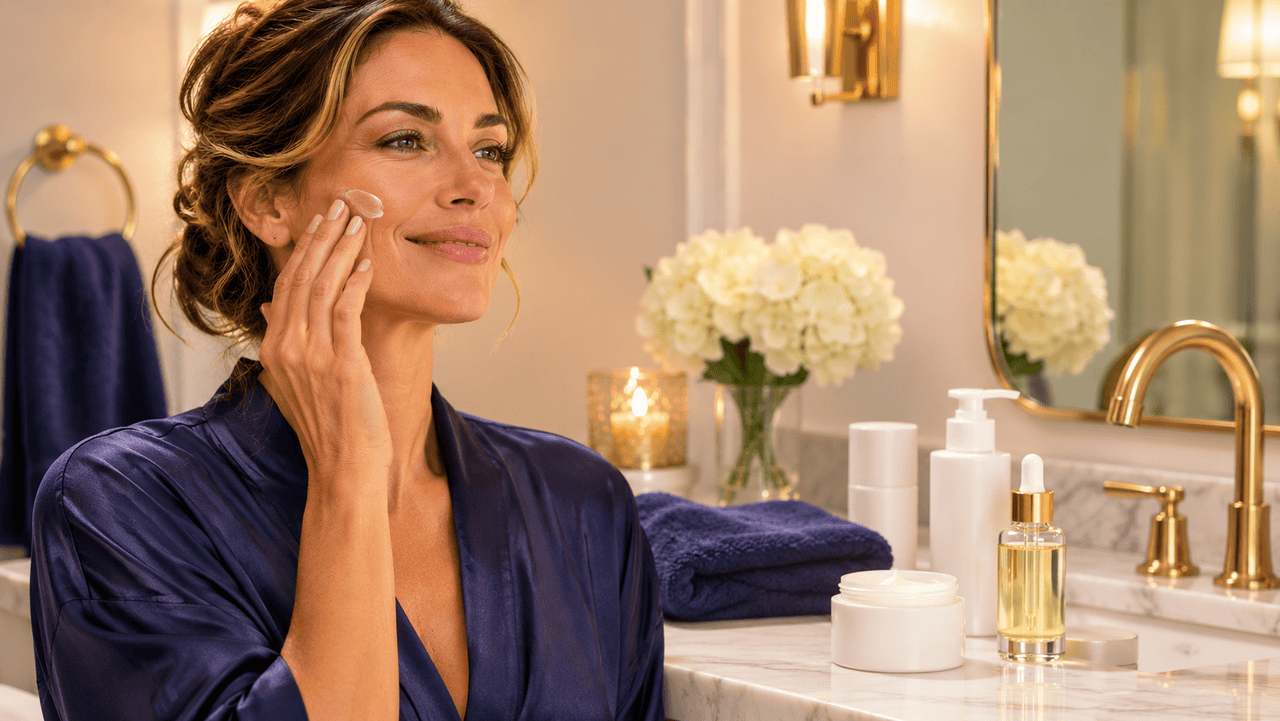
Wait about 24 hours after BOTOX® before applying retinol to the treated areas. If your skin is red, bruised, or sensitive, give it another day or two. On treatment day, stick to a gentle cleanser, a simple moisturizer, and sunscreen, all patted on instead of rubbed in. After that, retinol and BOTOX® make an excellent anti-aging pair.
Key Takeaways
- Wait about 24 hours after BOTOX® before using retinol, tretinoin, or other retinoids on treated areas.
- Gentle cleanser, moisturizer, and sunscreen are fine on treatment day if you apply them without rubbing.
- Ask your injector before scheduling chemical peels, microneedling, lasers, or professional facials.
- There’s no evidence that retinol makes BOTOX® wear off faster. They work in different layers of the skin.
- BOTOX® relaxes the muscles that cause expression lines, while retinoids improve skin texture and fine lines, so they complement each other.
In This Article
- When Can You Use Retinol After BOTOX®?
- Skip It for the First 24 Hours
- When to Wait a Little Longer
- Why Wait to Use Retinol After BOTOX®?
- Your Skincare Timeline After BOTOX®
- Same Day: The Gentle Basics
- After 24 Hours: Retinol, Vitamin C, and Most Serums
- Ask Your Injector First: Peels, Microneedling, and Lasers
- How Retinol and BOTOX® Work Together
- Tips for Restarting Retinol After BOTOX®
- Should You Stop Retinol Before BOTOX®?
- Frequently Asked Questions
- Build Your Anti-Aging Plan at Goldfingers Aesthetics
When Can You Use Retinol After BOTOX®?
Skip It for the First 24 Hours
On treatment day, leave retinol out of your nighttime routine. Fresh injection sites need a calm first day, and the first 24 hours are when most BOTOX® aftercare rules apply. You can usually return to retinol the next evening.
When to Wait a Little Longer
Give your skin an extra day or two if:
- You notice redness, bruising, or swelling at injection sites.
- You use prescription tretinoin or a high-strength retinoid.
- Your skin tends to be sensitive or easily irritated.
- You had dermal fillers at the same appointment.
If you’ve never used retinol before, don’t start it the same week as your BOTOX® appointment. Wait until your skin has settled so you can tell the difference between normal retinol adjustment and a reaction to your injections.
Keep your routine gentle on treatment day, then restart retinol about 24 hours after BOTOX®.
Why Wait to Use Retinol After BOTOX®?
Retinoids are powerful ingredients. The American Academy of Dermatology notes that they can irritate the skin, especially when you start with a strong formula or use them too often.
There are three good reasons to wait a day after BOTOX®:
- Avoid extra irritation. Retinol can cause redness, dryness, or stinging, which you don’t want on top of fresh injection sites.
- Avoid rubbing. Applying serums and creams usually involves massaging them into the skin. On treatment day, you want to avoid rubbing treated areas.
- Keep things clear. If your skin becomes red or irritated, it’s easier to figure out why when you haven’t added strong actives into the mix.
Your Skincare Timeline After BOTOX®
Same Day: The Gentle Basics
- Gentle cleanser. Wash with your fingertips and lukewarm water, then pat dry. Skip cleansing brushes and scrubs on day one.
- Simple moisturizer. A fragrance-free moisturizer is fine. Pat it on instead of massaging it in.
- Sunscreen. Keep up your daily SPF and apply it gently.
- Makeup. Fine once the tiny injection points have closed, with a light touch over treated areas.
After 24 Hours: Retinol, Vitamin C, and Most Serums
From the next day, you can usually return to most of your routine, including:
- Retinol and other over-the-counter retinoids
- Prescription tretinoin, unless your prescribing doctor advised otherwise
- Vitamin C and antioxidant serums
- Hyaluronic acid serums
- Gentle exfoliating products, if your skin isn’t irritated
Ask Your Injector First: Peels, Microneedling, and Lasers
More intensive treatments that work on the skin, or that involve pressure and heat on the face, need your injector’s input before you book. These include:
- Chemical peels
- Microneedling
- Laser resurfacing and other energy-based treatments
- Professional facials with massage or extractions
Cleveland Clinic recommends waiting at least 24 hours before a facial or massage, and longer if you have any bruising or swelling. For more intensive treatments, your injector may suggest a longer gap.
Also skip facial rollers, gua sha tools, and cleansing devices for the first 24 hours.
How Retinol and BOTOX® Work Together
BOTOX® and retinoids target aging in different ways, which is why they work so well together.
BOTOX® works on muscles. It temporarily relaxes the muscles that cause dynamic expression lines, such as frown lines, forehead lines, and crow’s feet. Learn more about BOTOX® treatment at Goldfingers Aesthetics.
Retinoids work on the skin. According to the American Academy of Dermatology, retinoids speed up skin cell turnover and boost collagen, which helps improve skin tone and soften fine lines and wrinkles.
Using both can give you a smoother, fresher look than either one alone. BOTOX® reduces the movement that creates creases, and retinoids help improve the texture and quality of the skin on top.
For deeper lines that remain even when your face is relaxed, your injector may also recommend dermal fillers. Read our guide to BOTOX® vs. dermal fillers to understand the difference.
Tips for Restarting Retinol After BOTOX®
The American Academy of Dermatology offers several tips that are especially helpful after BOTOX®:
- Use it at night. Retinoids can make skin more sensitive to the sun, so apply them in the evening.
- Start gently. If your skin feels sensitive, use retinol every other night at first and build back up.
- Use a small amount. A pea-sized amount is enough for your whole face.
- Pat, don’t rub. For the first few days, gently pat products onto treated areas.
- Wear sunscreen every day. Daily sun protection is essential when you use a retinoid. In Florida, it matters year-round. See our tips on protecting your skin in the sun after BOTOX®.
Should You Stop Retinol Before BOTOX®?
Unlike peels or laser treatments, BOTOX® usually doesn’t require you to stop retinol ahead of time. Tell your injector about every product you use, especially prescription retinoids.
If your skin is visibly irritated, peeling, or raw when you arrive, your injector may suggest pausing retinol for a few days and rescheduling until your skin calms down.
Frequently Asked Questions
How long after BOTOX® can I use retinol again?
Most people can restart retinol about 24 hours after BOTOX®. If you have redness, bruising, or sensitive skin, or you use a prescription retinoid, waiting 48 hours or more is a gentler choice.
Can I use tretinoin after BOTOX®?
Yes, after about 24 to 48 hours. Because tretinoin is stronger than over-the-counter retinol, it can be more irritating, so follow your prescribing doctor’s directions and ease back in if your skin feels sensitive.
Does retinol make BOTOX® wear off faster?
There’s no evidence that retinol shortens how long BOTOX® lasts. BOTOX® works in the muscle beneath the skin, while retinol works on the skin’s surface layers. Learn what affects longevity in our guide to how long BOTOX® lasts.
What is the best cream to use after BOTOX®?
You don’t need a special product. A gentle, fragrance-free moisturizer and a broad-spectrum sunscreen are all your skin needs on treatment day. Apply both by patting, not rubbing.
Can I use vitamin C serum after BOTOX®?
Yes. Most people can return to vitamin C serums about 24 hours after BOTOX®. If your skin feels sensitive, wait until it settles.
Can I exfoliate after BOTOX®?
Wait at least 24 hours before using exfoliating products, and skip physical scrubs on treated areas for the first few days. Ask your injector before booking professional exfoliating treatments like chemical peels.
Is redness after retinol a reaction to my BOTOX®?
Usually not. Retinoids commonly cause mild redness and dryness, especially if you use them often. Redness that spreads, itching, or hives could signal something else. Learn the signs of an allergic reaction to BOTOX® and contact your provider if you’re unsure.
Build Your Anti-Aging Plan at Goldfingers Aesthetics
Retinol and BOTOX® are a powerful combination. Just give your skin a gentle first day before restarting your routine. Our experienced injectors can create a personalized plan for lines and wrinkles that fits your skin, your goals, and your lifestyle.
Visit a location near you:
You can also find your nearest location or book an appointment online.