
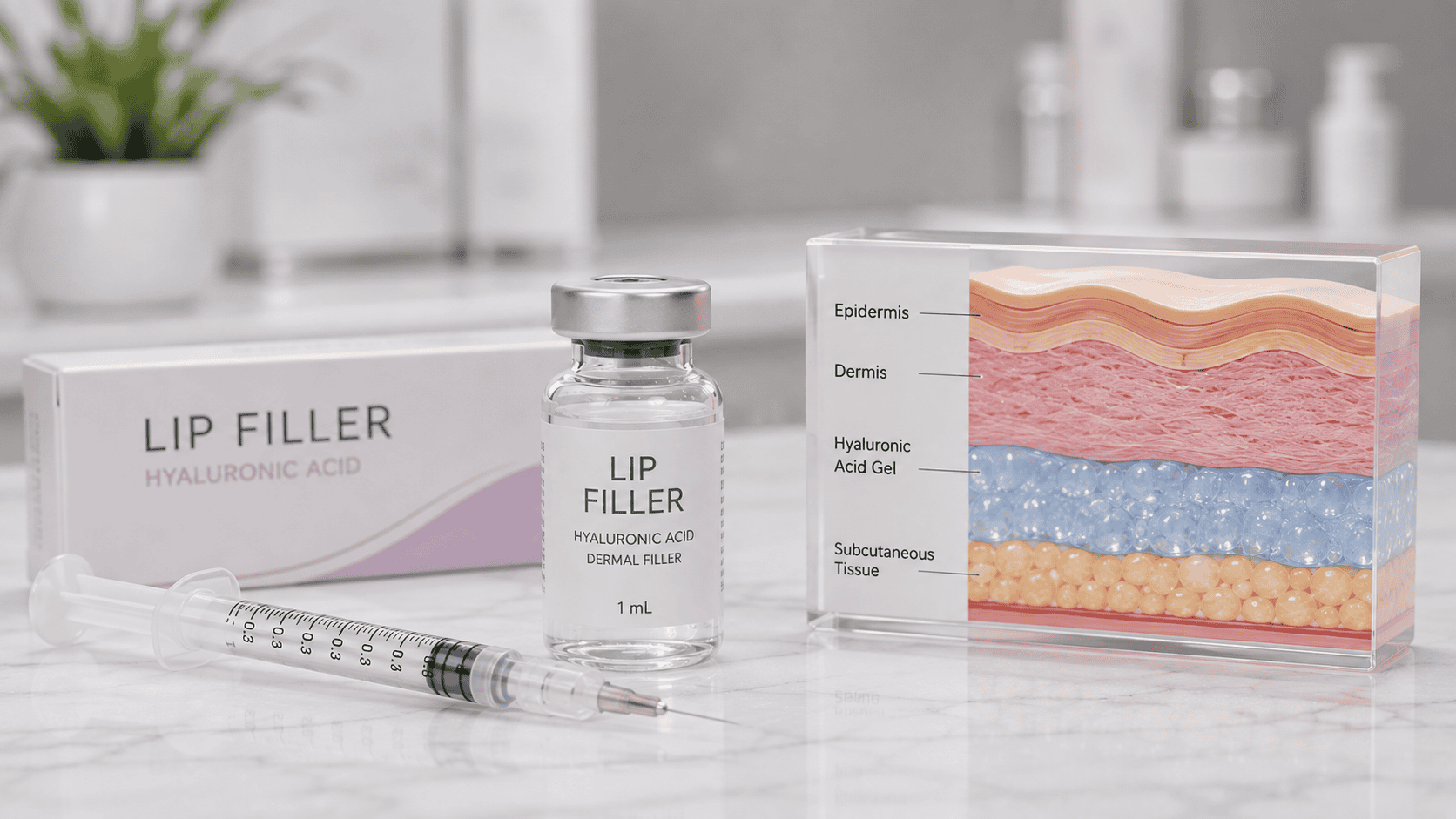
If you are considering lip enhancement, one of the first questions you may have is: What is lip filler made of? Most modern lip fillers are primarily made with hyaluronic acid, a substance that is naturally present in the human body and is known for its ability to attract and retain water. When formulated as an injectable gel, hyaluronic acid can add volume, improve definition, soften lines, and create smoother-looking lips. Different filler products use unique formulations and technologies, which can affect their texture, flexibility, longevity, and the type of results they are designed to provide.
Understanding what goes into lip filler can make the treatment process feel much more approachable. While people often use the term "lip filler" as though it refers to a single product, there are actually several injectable filler formulations available. The right choice depends on factors such as your natural lip anatomy, the amount of enhancement you want, your aesthetic goals, and the recommendations of a qualified provider.
The Main Ingredient in Most Lip Fillers: Hyaluronic Acid
Hyaluronic acid, commonly abbreviated as HA, is the primary ingredient in many of today's most widely used lip fillers. It is a type of sugar, specifically a polysaccharide, that naturally occurs in tissues throughout the body, including the skin and cartilage. One of its most useful characteristics is its ability to bind with water. When hyaluronic acid is formulated as a gel and injected into tissue, it can produce a smoothing and filling effect.
That water-attracting quality makes HA especially useful for lip enhancement. Instead of simply adding rigid volume, hyaluronic acid fillers can create softness, hydration, and definition when appropriately selected and carefully placed.
Depending on the treatment plan, an HA lip filler may be used to:
- Add fullness to naturally thin lips
- Restore volume that has changed with age
- Improve lip symmetry
- Enhance the shape of the upper or lower lip
- Create more definition along the lip border
- Refine the Cupid's bow
- Soften vertical lines around the mouth
- Improve the appearance of lip hydration and smoothness
The goal does not always have to be noticeably larger lips. For many patients, subtle improvements in shape, proportion, and definition can make a meaningful difference while maintaining a natural appearance.
Why Is Hyaluronic Acid Used in Lip Fillers?
Hyaluronic acid has several characteristics that make it particularly well suited to aesthetic treatments. In addition to occurring naturally in the body, HA is able to hold moisture and integrate into soft tissue. It can therefore provide volume without necessarily creating an overly firm or unnatural appearance.
The exact properties of an HA filler depend on how the product is manufactured. Manufacturers can modify and crosslink hyaluronic acid so that it remains in the treatment area longer before gradually being broken down by the body. According to the FDA, hyaluronic acid used in dermal fillers may be chemically modified through crosslinking to extend its duration.
This means not every HA filler feels or behaves exactly the same. Some gels are designed to be especially flexible and move naturally with expressions. Others may provide greater structure or definition. A knowledgeable injector can choose a filler based on the specific area being treated and the desired outcome.
What Does "Crosslinked Hyaluronic Acid" Mean?
When researching lip fillers, you may encounter the term "crosslinked hyaluronic acid." Crosslinking refers to the manufacturing process used to connect HA molecules together, helping the gel maintain its structure after injection.
Without modification, naturally occurring hyaluronic acid is broken down relatively quickly. Crosslinking helps produce an injectable material that remains in the tissue long enough to create a temporary cosmetic effect.
The degree and method of crosslinking can influence characteristics such as:
- How firm or soft the filler feels
- How easily it spreads within tissue
- How well it provides structure
- How naturally it moves with facial expressions
- How long the treatment may last
These differences are one reason choosing a filler involves more than simply selecting a brand. Product characteristics should be matched with the patient's anatomy and treatment goals.
Are There Other Ingredients in Lip Filler?
Yes. Although hyaluronic acid is often the primary ingredient, lip filler formulations can contain additional components that help create the final injectable gel.
One ingredient commonly found in certain dermal fillers is lidocaine, a local anesthetic. Lidocaine is incorporated into some filler formulations to help reduce discomfort during injection. The FDA notes that some approved dermal fillers contain lidocaine for this purpose.
For example, certain FDA-approved HA filler formulations contain hyaluronic acid along with a crosslinking agent and 0.3% lidocaine.
Specific formulations vary by product, so patients should discuss exactly which filler is being recommended during their consultation.
Are All Dermal Fillers Made of Hyaluronic Acid?
No. Hyaluronic acid is only one category of dermal filler material. Other FDA-approved dermal filler materials can include calcium hydroxylapatite and poly-L-lactic acid, among others. These materials have different properties and are used for different aesthetic purposes.
That does not mean every type is appropriate for the lips. Products are approved for particular treatment areas and indications, and different fillers are designed to perform differently within facial tissues.
For lip augmentation specifically, HA-based products are widely used. For example, the FDA notes that Restylane Kysse is an HA-based filler approved for injection into the lips to add fullness and address certain lines around the upper lip.
A qualified provider should determine which filler is appropriate rather than treating all injectable products as interchangeable.
How Does Lip Filler Actually Add Volume?
Once injected, HA filler physically adds gel to selected areas of the lips. Because hyaluronic acid also interacts with water, the treatment can contribute to a smoother, fuller appearance.
Strategic placement matters just as much as the filler itself. An experienced injector may place relatively small amounts of product in different parts of the lips depending on what the patient wants to achieve.
For example, treatment might focus on:
- Lip body: To create additional fullness
- Vermilion border: To improve definition around the edges
- Cupid's bow: To refine the shape of the upper lip
- Lip corners: To support overall balance where appropriate
- Perioral lines: To soften select lines around the mouth when an appropriate filler is used
The best results generally come from treating the lips as part of the entire face rather than focusing on volume alone. Lip width, projection, upper-to-lower lip proportions, facial profile, and surrounding features can all influence what looks balanced.
Does Lip Filler Become Part of Your Lips Permanently?
Most commonly used HA dermal fillers are temporary. The FDA explains that most approved dermal fillers have temporary effects because their materials are gradually broken down and absorbed by the body.
How long lip filler lasts can vary considerably. Factors include:
- The specific filler formulation
- The amount of filler injected
- Where and how it is placed
- The patient's individual biology
- The movement of the treated area
- Previous treatments
- The aesthetic endpoint being maintained
The FDA notes that duration depends on both the filler material and the location where it is injected.
Because lip filler is temporary, patients who want to maintain their results may eventually choose additional treatment.
Is Lip Filler the Same as BOTOX?
No. Lip filler and BOTOX are different products that work in completely different ways.
Lip fillers add volume or structure underneath the skin or within the lips. BOTOX is a neuromodulator that temporarily reduces targeted muscle activity. While both treatments are injectable, they are not interchangeable.
For example, filler may be used to enhance lip volume or definition, while a neuromodulator may sometimes be used for treatments involving muscle movement around the mouth. Your provider can recommend the most appropriate approach based on what you want to change.
Can Lip Filler Look Natural?
Yes. Lip filler does not automatically mean dramatically enlarged lips. The final appearance depends on the product selected, the amount used, the injection technique, the patient's anatomy, and the desired result.
For some patients, the best treatment may involve only a subtle enhancement. A conservative approach can focus on refining existing features rather than substantially changing them.
Natural-looking lip filler may emphasize:
- Balanced proportions
- Gentle definition
- Appropriate projection
- Improved symmetry
- Smooth contours
- Harmony with surrounding facial features
At Goldfingers Aesthetics, dermal filler treatments emphasize refined techniques and natural-looking results, with injectable services that include lip fillers and other facial contouring applications.
What Happens During a Lip Filler Treatment?
The exact experience varies by provider and filler, but treatment typically starts with a consultation. This is an important opportunity to discuss what you like about your lips, what you would like to improve, and the type of result you hope to achieve.
Your provider may evaluate factors such as:
- Your natural lip shape
- Facial proportions
- Lip symmetry
- Existing volume
- Skin quality
- Previous filler treatments
- Your medical history
- Your desired level of enhancement
After developing a treatment plan, the filler is carefully injected into predetermined areas. Some products contain lidocaine to reduce injection discomfort, and providers may use additional comfort measures depending on the treatment.
Temporary swelling, tenderness, redness, or bruising can occur after dermal filler injections. The FDA notes that swelling and bruising are among the commonly reported short-term effects and that many such reactions resolve within days to weeks.
Your provider should give you individualized instructions about what to expect following treatment.
Why Injector Experience Matters
Knowing what lip filler is made of is useful, but the product itself is only part of the equation. Injectable treatments require a detailed understanding of facial anatomy, product characteristics, placement, proportions, and potential complications.
The FDA recommends choosing a licensed health care provider who has experience administering dermal fillers, understands anatomy, knows how to manage complications, and discusses both risks and benefits before treatment.
An experienced injector can also help prevent an overly standardized approach. Two patients may want fuller lips but need entirely different treatment strategies based on their anatomy.
Good aesthetic treatment is highly individualized. Rather than simply adding as much product as possible, an injector should consider where enhancement will create the most balanced outcome.
What Are the Risks of Lip Filler?
Lip filler is a medical aesthetic procedure, so it carries potential risks. Common temporary reactions can include swelling, bruising, tenderness, redness, firmness, or discomfort near injection sites.
Less common but potentially serious complications are also possible. This is why lip injections should be performed by appropriately trained and licensed professionals who are prepared to recognize and manage complications.
Patients should also avoid purchasing filler products directly online or attempting at-home injections. The FDA specifically warns consumers not to buy or use lip and facial fillers sold directly to the public and advises against needle-free filler injection devices.
A consultation with a qualified provider allows you to discuss your individual risks, medical history, expectations, and treatment options before deciding whether lip filler is right for you.
How Do Providers Choose the Right Lip Filler?
There is no universally "best" lip filler for every person. Different formulas have different textures, degrees of flexibility, and structural characteristics.
Your provider may consider:
- Whether you want subtle or more noticeable volume
- Whether definition or fullness is the primary goal
- Your existing lip structure
- The amount of movement in the treatment area
- Whether you have received filler before
- Your overall facial proportions
- How soft or structured the desired result should be
Goldfingers Aesthetics offers dermal filler treatments that include products from well-established filler families such as JUVÉDERM and RESTYLANE. Its specialists use injectable treatments for lips and other facial contouring applications.
Frequently Asked Questions About Lip Filler
What is lip filler made of?
Most commonly used modern lip fillers are made primarily from hyaluronic acid, a naturally occurring sugar found in the body. Certain formulations also contain additional ingredients such as lidocaine to help reduce injection discomfort.
Is hyaluronic acid natural?
Hyaluronic acid naturally occurs in the human body, including the skin and cartilage. The HA used in fillers is manufactured and may be chemically crosslinked to help it remain in tissue longer.
How long does lip filler last?
Duration varies according to the product, treatment area, amount injected, and individual patient factors. Most HA fillers are temporary and are gradually absorbed by the body.
Does lip filler always make your lips much bigger?
No. Lip filler can be used conservatively to improve definition, symmetry, contour, or subtle fullness rather than creating dramatically larger lips.
Is lip filler permanent?
Most commonly used HA lip fillers are temporary. The body gradually breaks down and absorbs the material over time.
Do all lip fillers contain lidocaine?
No. Some dermal filler products contain lidocaine to help minimize discomfort, while others may not. Your provider can explain the ingredients in the specific product recommended for you.
Can lip filler help with lines around the mouth?
Certain dermal fillers can be used for specific perioral lines. The appropriate product and treatment approach depend on the location and type of lines being treated.
How much lip filler do I need?
There is no single amount that is appropriate for everyone. Your provider will recommend an amount based on your anatomy, existing volume, desired changes, and treatment history.
How soon will I see my lip filler results?
Added volume is generally apparent after treatment, although temporary swelling can make the lips look different during the initial recovery period. Your provider can explain when to assess your settled result.
Who should perform lip filler injections?
Dermal fillers should be administered by an appropriately licensed and experienced health care professional with knowledge of facial anatomy, filler products, injection technique, and complication management.
Discover Refined Lip Enhancement at Goldfingers Aesthetics
Understanding what lip filler is made of can help you approach treatment with greater confidence, but choosing the right product is only one part of achieving a beautiful result. Technique, facial anatomy, artistry, and attention to detail all play essential roles in creating lips that complement the rest of your features.
At Goldfingers Aesthetics, our goal is to provide an everyday indulgence that helps you feel refreshed, invigorated, and confident. Our professional team of highly trained skin care specialists and doctors combines licensed training, creative ability, careful attention to detail, and refined aesthetic techniques to provide high-quality cosmetic enhancement services. We believe subtle, understated changes can create some of the most dramatic differences.
Whether you want to restore lost fullness, refine your natural lip shape, enhance definition, or simply learn whether lip filler is right for you, Goldfingers Aesthetics can help you explore your options through a personalized approach. Our specialists offer dermal filler and lip enhancement treatments designed with natural-looking results and facial harmony in mind.
Schedule a consultation with us today and discover how professionally administered lip filler can enhance your features while still allowing you to look like yourself.