
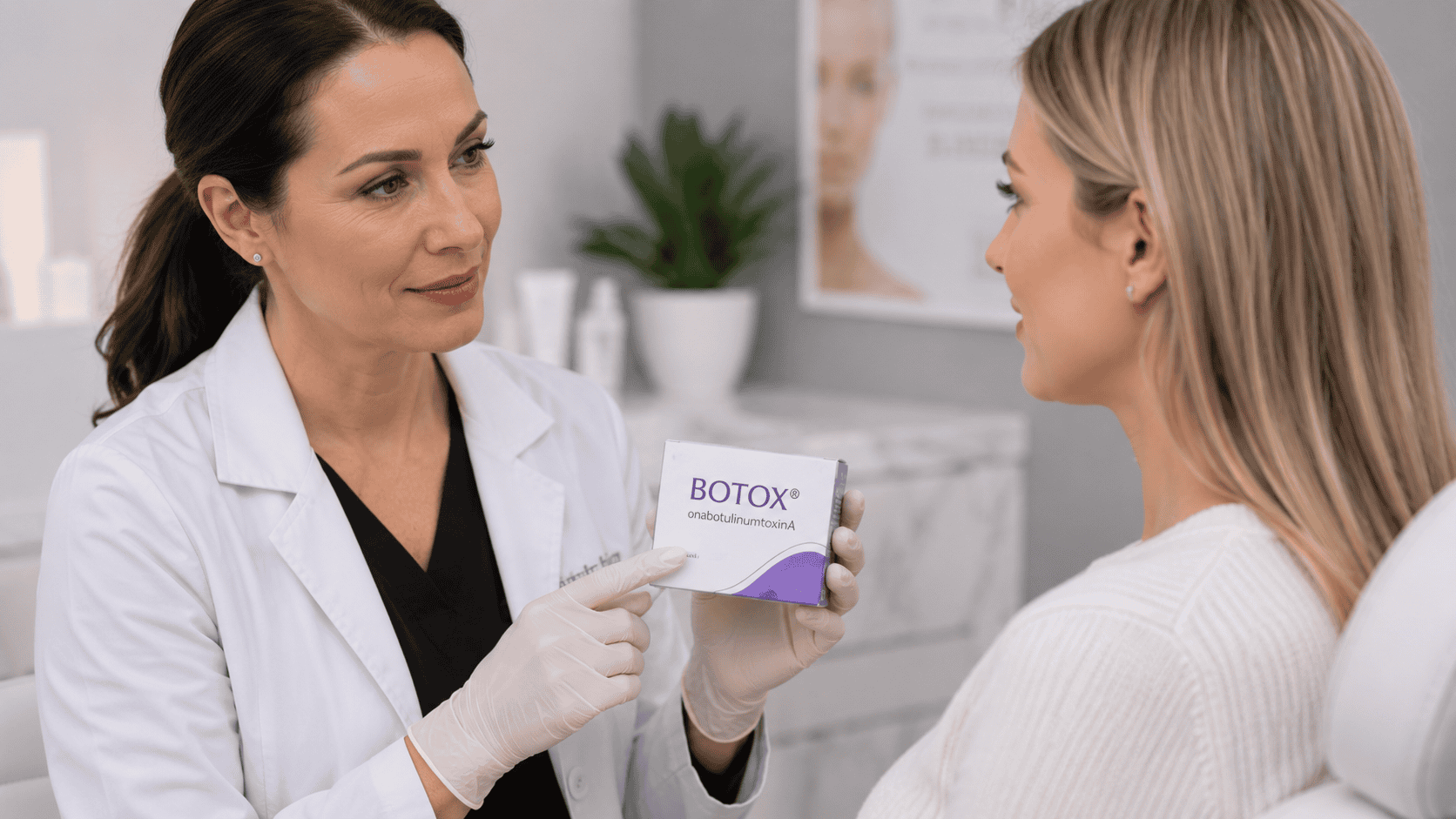
If you are thinking about smoothing forehead lines, softening crow’s feet, or reducing the appearance of frown lines, you may be asking an important question: Is BOTOX® safe? For most appropriate candidates, BOTOX® Cosmetic has an established safety profile when it is prescribed appropriately, obtained from an authorized source, and administered by a properly licensed and trained healthcare professional. Like any prescription treatment, however, BOTOX® is not completely risk-free. Understanding how it works, what side effects are possible, and why your choice of provider matters can help you make a more informed decision.
What Is BOTOX®?
BOTOX® Cosmetic is a prescription injectable treatment containing onabotulinumtoxinA, a purified botulinum toxin product. It belongs to a group of injectable medications known as neuromodulators.
Rather than filling wrinkles or adding volume beneath the skin, BOTOX® works by temporarily reducing activity in selected muscles. Many facial lines become increasingly noticeable because the same muscles repeatedly contract when you smile, squint, concentrate, or raise your eyebrows. By reducing this muscle activity, BOTOX® can temporarily soften the appearance of certain dynamic wrinkles.
The FDA has approved botulinum toxin products for the temporary improvement of certain facial lines and wrinkles. BOTOX® Cosmetic is one of several FDA-approved botulinum toxin products used for aesthetic purposes.
BOTOX® is commonly associated with the treatment of areas such as:
- Forehead lines
- Frown lines between the eyebrows
- Crow’s feet around the eyes
- Other facial areas when clinically appropriate and recommended by a qualified provider
The specific areas treated, number of injections, and amount of product used will depend on your anatomy, aesthetic goals, and the professional judgment of your provider.
So, Is BOTOX® Safe?
BOTOX® Cosmetic has been extensively used in aesthetic medicine, but the most accurate answer is that its safety depends on several factors.
Receiving an FDA-approved product does not mean that complications are impossible. It means the product has been evaluated for specific uses and has established prescribing information that healthcare professionals are expected to follow.
The FDA also emphasizes that botulinum toxin products are prescription medications and should be obtained through authorized sources and administered by appropriately licensed and trained healthcare professionals. This is especially important because unauthorized or counterfeit products may be contaminated, improperly stored, mislabeled, ineffective, or unsafe.
A safe BOTOX® experience therefore involves more than the injection itself. It includes appropriate patient screening, authentic product, knowledgeable dosing, an understanding of facial anatomy, precise placement, and proper follow-up care.
Why Provider Experience Is So Important
BOTOX® injections may appear relatively simple, especially because appointments can often be completed without surgery or lengthy downtime. However, administering BOTOX® properly requires significant knowledge of facial anatomy and muscle movement.
Small differences in injection location or dosage can affect the final result. The goal is generally not to eliminate every bit of facial movement. Instead, skilled aesthetic treatment is often about creating balance.
An experienced provider should consider factors such as:
- Your facial anatomy
- The strength of individual muscles
- Natural facial asymmetry
- Previous injectable treatments
- Your medical history
- The depth and location of your lines
- Your desired level of movement
- Your overall aesthetic goals
This individualized approach can help achieve results that look refreshed rather than overdone.
Goldfingers Aesthetics emphasizes specialized aesthetic injection techniques and reports being ranked among the top 1% of BOTOX® and JUVÉDERM® providers nationwide. The practice also provides hands-on injector training focused on facial anatomy, aseptic technique, dosage, injection patterns, risk zones, and complication protocols.
What Are the Common Side Effects of BOTOX®?
Most aesthetic treatments come with the possibility of side effects, and BOTOX® is no exception. Some people may experience temporary reactions around the injection sites.
Reported side effects associated with botulinum toxin injections can include:
- Redness
- Tenderness or discomfort
- Swelling
- Bruising
- Headache
- Temporary facial weakness
- Eyelid or eyebrow drooping
The FDA notes that clinical trials involving botulinum toxin products have reported effects including localized pain, swelling, redness, bruising, facial weakness, eyelid drooping, and brow drooping.
Many localized reactions are temporary, but you should discuss expected side effects and warning signs with your provider before undergoing treatment.
Are Serious BOTOX® Complications Possible?
Yes. Serious complications are uncommon, but they are possible, which is why BOTOX® should be treated as a medical procedure rather than simply a beauty service.
FDA-approved botulinum toxin products carry a boxed warning concerning the possibility that the effects of the toxin may spread beyond the injection area. Potential symptoms can include generalized muscle weakness, double vision, difficulty speaking, difficulty swallowing, or breathing difficulties. Swallowing and breathing problems can become life-threatening in severe cases.
Seek immediate medical care if you experience difficulty breathing, swallowing, or speaking, or other concerning symptoms following a botulinum toxin injection.
These warnings should not necessarily discourage an appropriate candidate from considering treatment. Instead, they reinforce why injectable treatments should be administered responsibly by qualified professionals using legitimate products.
Who May Not Be a Good Candidate for BOTOX®?
BOTOX® is not appropriate for everyone. Before receiving treatment, you should provide your healthcare provider with an accurate medical history and discuss medications, supplements, allergies, previous cosmetic treatments, and relevant medical conditions.
A provider may recommend postponing or avoiding treatment depending on factors such as your current health, medications, neuromuscular conditions, previous reactions to botulinum toxin products, or other individual circumstances.
Pregnancy and breastfeeding should also be discussed. The FDA notes that cosmetic botulinum toxin injections are not recommended for use while pregnant or lactating.
Never assume that an injectable treatment is appropriate simply because you have received it previously. Your health, medications, goals, and circumstances may change over time.
What Should Happen During a BOTOX® Consultation?
A consultation is an important part of safe cosmetic treatment. It allows your provider to learn about you before making recommendations.
During the consultation, expect to discuss your areas of concern and what you hope to accomplish. Your provider may examine how your face looks both at rest and while making expressions.
For example, you might be asked to smile, squint, raise your eyebrows, or frown. These movements allow the injector to evaluate which muscles are contributing to the lines you would like to address.
A thorough consultation may also cover:
- Your medical history
- Current prescription and over-the-counter medications
- Supplements you take
- Previous BOTOX® or injectable treatments
- Allergies or previous reactions
- Expected benefits
- Possible side effects
- Alternative treatment options
- Aftercare instructions
You should feel comfortable asking questions. An experienced provider should be able to explain why a particular treatment plan is recommended rather than simply offering the same injection pattern to every patient.
How Can You Make a BOTOX® Treatment Safer?
While you cannot eliminate every potential risk, you can take meaningful steps to protect yourself.
Choose a Qualified Provider
Avoid choosing an injector based exclusively on price. Training, licensing, knowledge of facial anatomy, product sourcing, experience, and treatment philosophy are far more important considerations.
Ask What Product Is Being Used
FDA officials have specifically warned consumers about unapproved and misbranded botulinum toxin products. Patients should receive FDA-approved products obtained through legitimate, authorized channels.
Be Honest About Your Medical History
Tell your provider about medical conditions, medications, supplements, previous procedures, allergies, and previous reactions. Even information that seems unrelated may be relevant to treatment planning.
Follow Your Provider’s Instructions
Follow all preparation and aftercare recommendations provided by your healthcare professional. If you are unsure about an instruction or experience an unexpected symptom, contact your provider.
Avoid DIY or Unlicensed Injections
BOTOX® is a prescription medication. It is not something to purchase online and administer yourself or have injected by an unqualified individual.
Will BOTOX® Make My Face Look Frozen?
Not necessarily.
The stereotypical "frozen" appearance is not an inevitable outcome of BOTOX®. Results depend heavily on treatment strategy, dosage, injection placement, anatomy, and individual preference.
Many patients want to soften noticeable lines while maintaining natural expressions. A conservative, individualized treatment approach can be designed around that goal.
Goldfingers Aesthetics describes its approach as focused on refined techniques and natural-looking results that smooth visible creases while helping patients retain natural facial expression.
Before treatment, be specific about what you want. If maintaining substantial facial movement is important to you, tell your injector. Your treatment should be designed around your goals rather than someone else's idea of the perfect result.
How Long Does BOTOX® Last?
BOTOX® provides temporary rather than permanent changes. Over time, the effects gradually wear off as muscle activity returns.
How long an individual result lasts can vary based on the area treated, amount administered, metabolism, muscle strength, treatment history, and individual response.
Because results are temporary, maintaining them generally requires future treatments. Your provider can recommend an appropriate schedule based on how you respond rather than relying on a one-size-fits-all timeline.
Does BOTOX® Require Downtime?
One reason BOTOX® has become such a widely recognized aesthetic treatment is its convenience. It is nonsurgical, and many patients are able to return to normal daily routines relatively quickly.
Temporary redness, tenderness, swelling, or bruising may occur around injection sites. Your provider will explain any temporary activity restrictions or aftercare recommendations that apply to you.
Even if you feel completely normal following treatment, follow the instructions you receive. Proper aftercare is part of the treatment process.
BOTOX® Safety Is About More Than the Product
When patients ask whether BOTOX® is safe, it is easy to focus entirely on what is inside the syringe. The bigger picture matters just as much.
Safe aesthetic treatment involves a combination of:
- Appropriate patient selection
- Authentic, properly sourced medication
- Correct product handling
- Accurate dosing
- Detailed facial anatomy knowledge
- Thoughtful injection placement
- Sterile technique
- Realistic treatment goals
- Clear aftercare instructions
- Proper management of potential complications
This is why the qualifications and experience of the professionals you trust with your treatment deserve serious consideration.
Frequently Asked Questions About BOTOX® Safety
Is BOTOX® FDA approved?
BOTOX® Cosmetic is FDA-approved for specific cosmetic indications. Your provider can explain which treatment areas and uses are FDA approved and whether a particular treatment is appropriate for you.
Is BOTOX® a toxin?
BOTOX® contains a purified form of botulinum toxin. Cosmetic botulinum toxin products use carefully controlled amounts designed for specific medical and aesthetic applications.
Can BOTOX® cause botulism?
Botulinum toxin products carry a boxed warning because toxin effects can potentially spread beyond the injection site and cause serious symptoms. Seek immediate medical care if symptoms such as difficulty swallowing or breathing occur.
Does BOTOX® permanently change your face?
No. The cosmetic effects of BOTOX® are temporary. Muscle activity gradually returns as the effects wear off.
Is BOTOX® safe for everyone?
No. Not everyone is an appropriate candidate. Your medical history, medications, allergies, health conditions, pregnancy or breastfeeding status, and previous reactions should be discussed with a qualified provider.
Can BOTOX® make your face look unnatural?
Results vary according to technique, dosage, treatment area, anatomy, and your goals. A skilled injector can develop a conservative treatment plan intended to maintain natural-looking facial movement.
Is bruising after BOTOX® normal?
Minor bruising can occur at an injection site. Redness, swelling, tenderness, and localized discomfort are also possible. Contact your provider if you experience symptoms that are unexpected, severe, or concerning.
How do I know whether my BOTOX® provider is reputable?
Look for appropriate licensing, medical training, injectable experience, transparent product sourcing, familiarity with facial anatomy, and a willingness to discuss risks and realistic expectations before treatment.
Should I choose BOTOX® based on price?
Price can be one consideration, but it should not be the only one. Provider qualifications, training, technique, authentic product sourcing, safety standards, and personalized care should play a major role in your decision.
Refresh Your Look With Goldfingers Aesthetics
If you are considering BOTOX® and want results that feel refreshed, balanced, and true to you, choosing an experienced aesthetic team is an important first step.
At Goldfingers Aesthetics, we believe cosmetic enhancement should help bring out the best version of you. Our approach centers on the subtle, understated improvements that can make a meaningful difference in how refreshed and confident you feel. Our professional team of highly trained skincare specialists, aesthetic providers, and doctors combines licensed training with attention to detail, consistency, and artistry to deliver personalized cosmetic enhancement services.
Goldfingers Aesthetics is recognized among the top 1% of providers nationwide for BOTOX® and JUVÉDERM®, with multiple locations throughout Florida and a team dedicated to refined, natural-looking results.
Whether you are beginning to notice expression lines or have already incorporated injectables into your aesthetic routine, the right treatment starts with understanding your options. Schedule a consultation with us today to discuss your goals, ask questions about BOTOX® Cosmetic, and discover a personalized approach designed to leave you looking smoother, refreshed, and unmistakably yourself.