
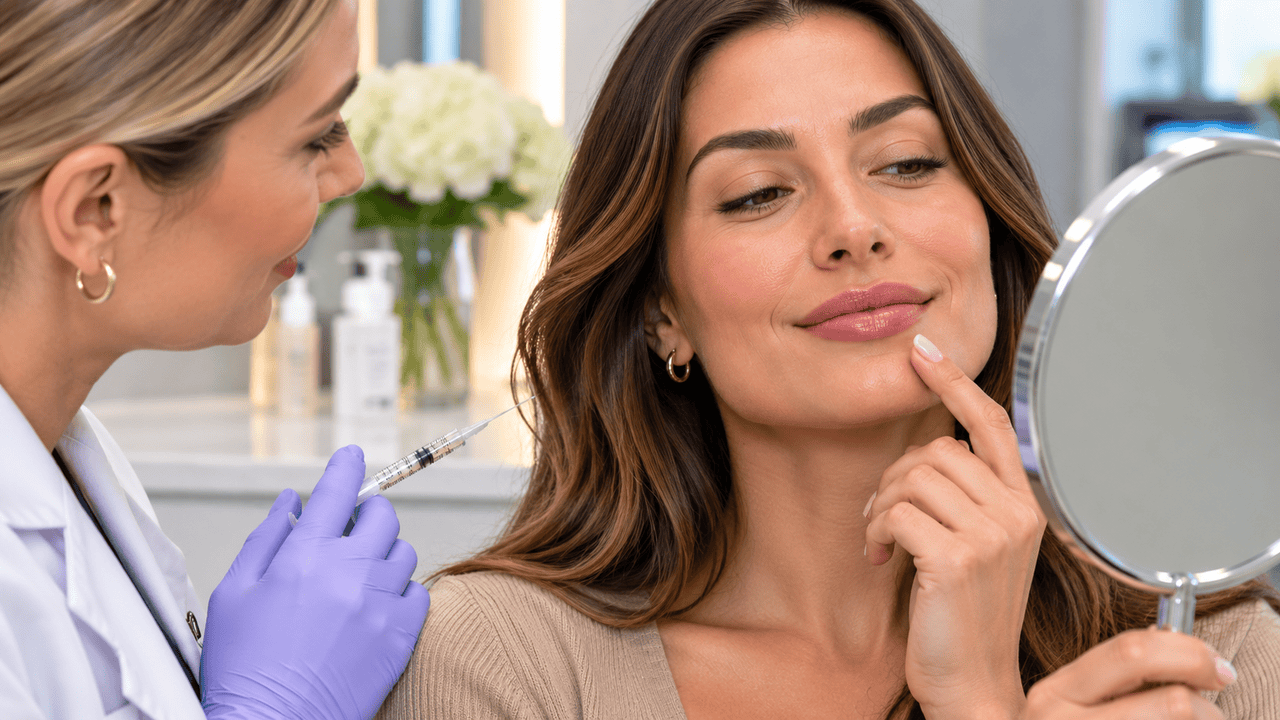
Lip filler pricing follows a per-syringe structure rather than a flat menu rate. What you ultimately pay reflects a combination of filler chemistry, total volume injected, your geographic market, and, most significantly, the clinical credentials of your provider. Two patients walking into different practices for the same aesthetic goal can receive quotes that differ by hundreds of dollars. Understanding why that gap exists is the first step toward making an informed choice for your customized aesthetic journey.
What Influences the Overall Cost of Lip Enhancement?
Injector expertise sits at the top of the pricing hierarchy. Allergan-trained providers who rank in the Top 1% nationally for Juvéderm® have invested years in advanced technique refinement, ongoing education, and supervised clinical volume that cannot be replicated by a weekend course. That credential differential shows up in the fee, but it also reflects in your outcomes: reduced complication rates, precise volume placement, and a far lower likelihood of needing corrective work later.
Regional market dynamics layer on top of that. Florida's aesthetic landscape is competitive, which generally keeps pricing accessible compared to major coastal metros. However, overhead costs, physician supervision requirements, and facility accreditation all factor into what a practice charges per syringe. A practice led by Dr. James Young, DO, carries structural standards that a non-medical spa does not, ensuring every treatment is backed by authentic clinical infrastructure.
Product formulation is another key variable that patients often overlook. Not all hyaluronic acid fillers are manufactured identically. The degree of cross-linking, the concentration of the gel matrix, and the specific chemical agents used to stabilize the product all affect both raw material costs and clinical behavior in tissue. Premium formulations engineered for lip-specific movement cost more to produce because they integrate smoothly with the orbicularis oris muscle.
Safety infrastructure adds a vital cost dimension worth understanding. Advanced practices incorporate high-frequency ultrasound vascular mapping before injection to measure the precise depth of the labial arteries. This matters clinically because arterial depth varies considerably between individuals. Sonographic data from a 3D imaging clinical study on hyaluronic acid lip fillers shows the superior labial artery averages 2.54 ± 1.89 mm deep at the lip midline and 6.62 ± 2.11 mm at the lip corner. That variability means a blind injection technique carries meaningful risk for one patient that it may not carry for another. Practices that invest in sonographic equipment and specialized training pass some of that cost to the patient, yielding a measurably safer procedure.
When you see a quote that feels unusually low, it helps to ask which of these safety and expertise factors has been removed from the equation.
How Many Syringes of Lip Filler Do You Actually Need?
A standard syringe contains 1.0 mL of hyaluronic acid gel, which equals roughly one-fifth of a teaspoon. That framing tends to surprise people because visual results look far more noticeable than that measurement implies. The lips are a small, highly expressive anatomical zone where modest volume additions produce clear improvements in projection, border definition, and facial balance.
For first-time patients, a conservative starting point of 0.5 mL (a half-syringe) or a full 1.0 mL is typically appropriate, depending on baseline volume loss and overall aesthetic goals. Clinical data offer useful context here: in a prospective study of 25 patients receiving a 1.0 mL HA filler syringe, 3D imaging documented an average lip volume gain of 0.96 ± 0.24 mL at one month post-injection, declining to 0.58 ± 0.17 mL at six months as the material naturally degraded (per the 3D imaging clinical study on hyaluronic acid lip fillers). The same study recorded a mean upper vermilion border height increase of 1.40 ± 0.40 mm at one month, representing a measurable structural change that translates to visible Cupid's bow definition.
A single syringe, placed with Allergan-trained precision, achieves subtle, natural-looking results for most patients. The goal of conservative dosing is to give tissue time to integrate the product. This allows you to evaluate your refreshed look before adding more volume. Experienced injectors at Goldfingers Aesthetics approach dosing as an open conversation with your existing facial structure rather than a rigid formula.
Specific structural objectives guiding syringe allocation include:
- Vermilion border definition: Sharpening the lip margin and Cupid's bow contour, where clinical studies document a mean upper vermilion border height increase of 1.40 ± 0.40 mm at one month post-injection.
- Facial symmetry correction: Addressing natural volume discrepancies between the upper and lower lip to restore balanced facial proportion.
- Perioral hydration: Improving skin texture and fine lines, as HA-induced dermal remodeling continues to enhance the area up to six months post-injection.
- Oral commissure elevation: Softening a downturned resting expression without adding excess projection.
Ready to discover your customized aesthetic plan? Schedule a lip aesthetic consultation with our Allergan-trained injectors today to receive an individualized quote tailored to your facial structure. Call (407) 333-4300 or contact our team across our Florida locations, including Orlando, Winter Park, and Tampa.
Breaking Down Hyaluronic Acid Fillers and Long-Term Value
Hyaluronic acid became the gold standard for lip augmentation because it solves two problems simultaneously: it delivers predictable volume and allows full reversibility. If a result is asymmetric or inconsistent with your expectations, intralesional hyaluronidase dissolves the gel quickly and completely. This corrective safety net is a genuine clinical advantage that permanent fillers like silicone cannot offer, making HA fillers an ideal choice for confidence restoration.
The chemistry of filler formulas continues to advance. Traditional HA options use 1,4-butanediol diglycidyl ether (BDDE) as a cross-linking agent to extend product life, but manufacturers have developed lower-residual alternatives to minimize tissue exposure. A multicenter study on low-BDDE dermal fillers evaluated formulations containing less than 0.01 ppm of BDDE and found that 73% of patients achieved a minimum 1-point improvement on the Lip Fullness Scale 2 immediately after treatment, with 66.7% maintaining that response at six months. Adverse events were mild and short-lived, consisting of brief swelling or minor redness, with no serious tissue reactions reported. Patient satisfaction remained consistently high throughout the follow-up period.
Filler longevity varies based on personal metabolism and movement. Most HA lip fillers persist for six to twelve months, as the constant motion of the orbicularis oris muscle accelerates reabsorption compared to static facial areas. Even as visible volume gradually softens, the deep hydration HA provides continues to benefit your skin texture long after the initial swelling subsides.
Maintenance over time typically becomes more cost-efficient. Initial treatments establish foundational volume, while subsequent touch-up sessions require smaller amounts of product to preserve your look. A balanced care schedule looks like this:
- Primary treatment: Initial placement establishing foundational volume, lip border symmetry, and structural projection.
- Maintenance session: Minor touch-ups every 6 to 12 months to preserve contour as material naturally metabolizes.
- Safety reversibility: Immediate corrective options using intralesional hyaluronidase whenever adjustments are needed.
"I'm always treated as a member of their family. They're very helpful and honest. I would recommend my friends to get any treatment here with confidence!" - Verified Patient Review
Evaluating Safety, Side Effects, and Potential Hidden Costs
Mild swelling, light bruising, and localized tenderness are common after lip filler injections and clear up within a few days. These reactions are standard inflammatory responses to needle placement, easily managed with simple aftercare. If you are scheduling around a social event, plan for about a week of healing time to allow results to settle nicely.
A complete discussion of treatment safety also includes delayed adverse reactions, which are rare but deserve honest disclosure. A systematic review on aesthetic procedure safety found that while immediate reactions like angioedema occur quickly, delayed granulomatous foreign body reactions have a mean onset time of 41.4 ± 50.8 months for HA fillers, compared to 72.8 ± 52.5 months for non-HA fillers. Triggers for delayed reactions vary, ranging from trace manufacturing elements to immune system responses triggered by unrelated viral infections. While underreporting makes exact rates hard to pin down, choosing an experienced medical team reduces your long-term risks significantly.
Selecting a practice with long-term clinical accountability matters. Receiving treatment in a practice led by Dr. James Young, DO, ensures that if an unexpected reaction ever occurs, you have direct access to experienced medical professionals who know how to manage it. The fee structure at an accredited medical facility reflects this level of ongoing care and safety oversight, offering value that discount clinics cannot match.
The United States leads globally in total aesthetic procedure volume according to the systematic review on aesthetic procedure safety, which also corresponds to the largest share of documented adverse reactions in clinical literature. This highlights why choosing an Allergan-trained provider and receiving clear informed consent are essential parts of your self-care journey.
Prioritize your safety and peace of mind by partnering with top-tier medical experts. Book your personalized consultation at Goldfingers Aesthetics today by calling (407) 333-4300 or visiting our Florida practices in Lake Mary, Winter Garden, or Sarasota.
Key Takeaways: Is Lip Filler Worth the Cost?
For most patients seeking subtle, natural-looking enhancements, lip filler offers an exceptional return on investment when performed by a skilled provider. True value relies on four primary pillars:
- Confidence restoration: Restoring lip volume changes how you express yourself in daily life, providing a refreshed appearance that feels entirely authentic.
- High procedural safety: Biocompatible HA fillers provide predictable, reversible results with an established safety profile when administered by licensed medical professionals.
- Customized treatment planning: Tailoring syringe volume to your facial structure prevents an overfilled look and avoids unnecessary product expenses.
- Nationally recognized expertise: Choosing Top 1% nationally ranked injectors ensures precision placement and long-term care dedicated to your aesthetic goals.
Choosing a provider based solely on cheap pricing often leads to compromised results, inexperienced injectors, or a lack of medical oversight. True value in lip augmentation comes from subtle, natural-looking results delivered by licensed medical professionals who prioritize your health and facial balance.
Frequently Asked Questions About Lip Filler Costs
What is the typical cost range for a syringe of lip filler?
Per-syringe costs vary based on product brand, geographic location, and practitioner expertise. Standard hyaluronic acid fillers reflect the quality of the formula and injector credentials, making a personalized consultation the best way to receive an exact quote.
Is a 0.5 mL half-syringe of lip filler worth the investment?
Yes, a half-syringe is ideal for patients seeking subtle enhancements, minor touch-ups, or gentle hydration without adding dramatic volume. For first-time patients who want to evaluate their results gradually, starting with 0.5 mL is a sound approach that experienced injectors frequently advise.
Why should caution be exercised if a provider offers lip fillers for under $400?
Significantly discounted pricing below market norms often points to unaccredited practitioners, diluted products, or unapproved materials that carry elevated complication risks. The systematic review on aesthetic procedure safety notes that many patients rely on social media rather than medical professionals for information, making cheap pricing particularly risky when patients lack the clinical background to spot warning signs.
How do lip fillers compare in cost and outcome to a Botox lip flip?
A Botox lip flip uses a small dose of neuromodulator to relax the orbicularis oris muscle, creating a subtle outward roll of the upper lip without physical volume. It offers a lower entry cost, but results are temporary, lasting two to three months. It cannot restore volume, shape the vermilion border, or correct structural asymmetry. Hyaluronic acid fillers physically support the lip architecture using a hydrating gel matrix, delivering results that last six to twelve months across a wider range of aesthetic goals.
How often will I need touch-up injections to maintain my lip filler results?
Most patients schedule maintenance sessions every 6 to 12 months, depending on individual metabolism and lifestyle. Maintenance treatments usually require less product than initial augmentations, making ongoing upkeep more economical. A customized treatment plan developed during your consultation provides a clear timeline and budget expectations from the start.
Schedule Your Consultation
Taking the step toward lip enhancement is an investment in your personal self-care journey. Working with Allergan-trained medical professionals who understand delicate facial harmony ensures a refreshed, luminous result that enhances your natural beauty.
Ready to explore your options? Contact Goldfingers Aesthetics at (407) 333-4300 or schedule your consultation online to meet with our Top 1% nationally ranked team across our Florida offices in Orlando, Winter Park, Lake Mary, Tampa (Northdale), and Downtown Tampa.