
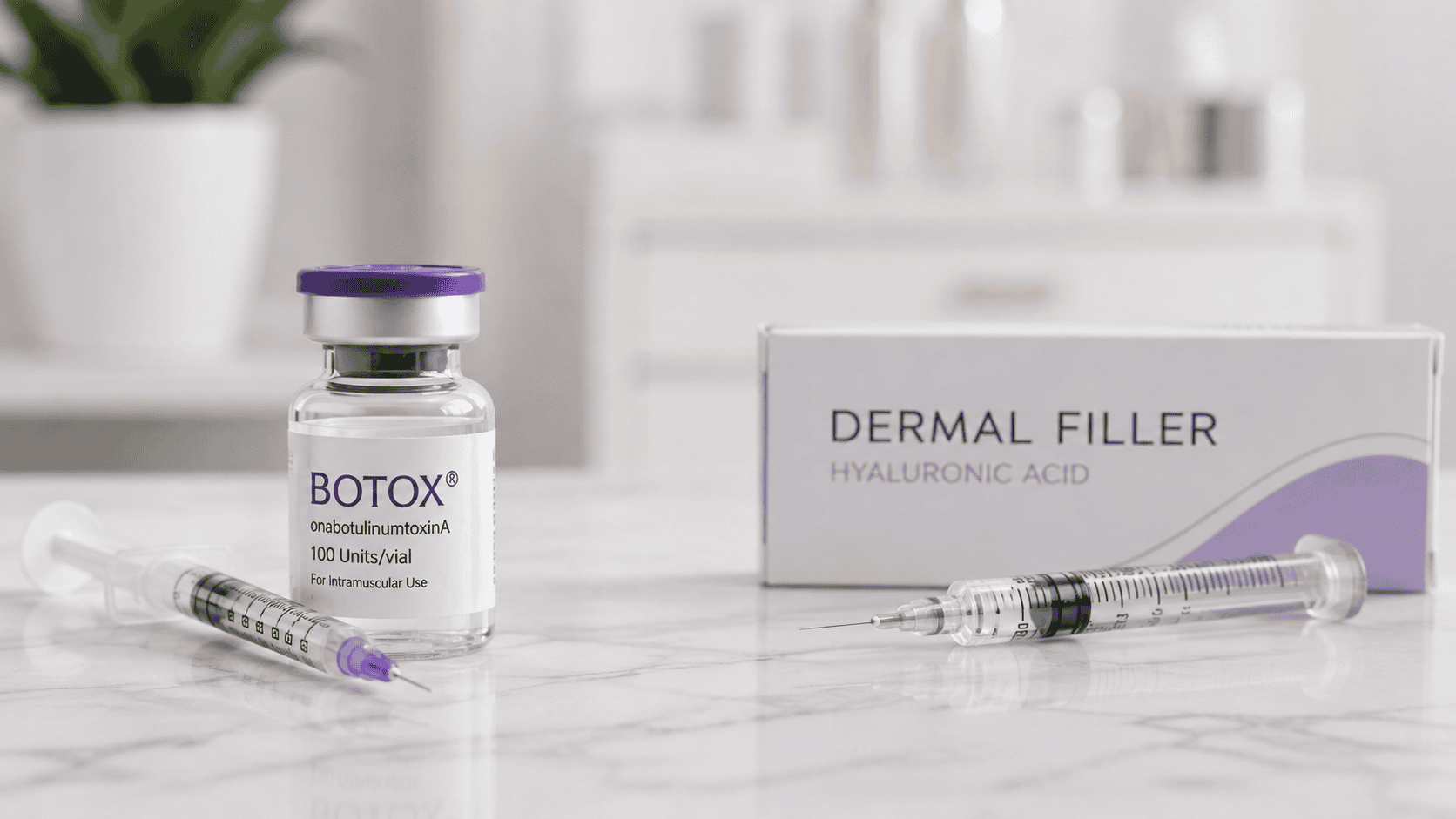
When considering cosmetic treatments for smoother, more youthful-looking skin, BOTOX® vs. fillers is one of the most common comparisons people make. Both treatments are popular nonsurgical options that can refresh your appearance, soften visible signs of aging, and enhance facial features without the recovery associated with surgery. However, BOTOX® and dermal fillers work in very different ways. Understanding those differences can help you have a more informed conversation with your aesthetic provider and determine which option may be better suited to your goals.
At Goldfingers Aesthetics, cosmetic enhancement is about much more than changing the way you look. The focus is on subtle, understated improvements that can make a noticeable difference while still letting you look like yourself. With highly trained skin care specialists and doctors providing individualized care, clients can explore treatments designed to complement their natural features and help them feel refreshed and confident.
What Is BOTOX®?
BOTOX® Cosmetic is an injectable treatment made from a purified form of botulinum toxin type A. It is primarily used to temporarily reduce the appearance of certain facial lines caused by repeated muscle movement.
Every time you smile, squint, raise your eyebrows, or frown, muscles beneath the skin contract. Over the years, these repeated movements can contribute to visible lines and wrinkles. BOTOX® works by temporarily reducing activity in specific treated muscles. As those muscles relax, the skin above them can appear smoother.
BOTOX® is commonly used to address areas such as:
- Forehead lines
- Frown lines between the eyebrows, sometimes called "11 lines"
- Crow's feet around the eyes
- Certain lines around the nose
- Other expression-related wrinkles, depending on a provider's assessment
The goal is generally not to eliminate facial movement altogether. When administered thoughtfully, BOTOX® can soften unwanted lines while maintaining natural-looking facial expression.
What Are Dermal Fillers?
Dermal fillers are injectable products designed to add or restore volume beneath the skin. While BOTOX® primarily affects muscle activity, fillers address concerns related to volume, facial contours, folds, and certain static wrinkles.
Many fillers are formulated with hyaluronic acid, a substance that naturally occurs in the body and helps attract and retain moisture. Other filler formulations may use different materials and technologies, so the specific product recommended will depend on the treatment area and desired outcome.
Fillers may be used to:
- Enhance lip shape or volume
- Restore fullness to the cheeks
- Improve facial contours
- Add definition to the chin or jawline
- Soften certain facial folds and lines
- Address age-related volume loss
- Improve symmetry in selected facial features
Because fillers physically add volume beneath or within the skin, they can be particularly useful when the primary concern is facial fullness rather than muscle movement.
The Main Difference Between BOTOX® and Fillers
The easiest way to understand the difference between BOTOX® and fillers is to consider what causes the concern being treated.
BOTOX® is typically used for dynamic wrinkles, which are lines that develop or become more noticeable when facial muscles move.
Fillers are generally used for volume loss, contour enhancement, and certain static wrinkles, which may remain visible even when your face is relaxed.
For example, if you are bothered by horizontal forehead lines that become prominent when you raise your eyebrows, BOTOX® may be appropriate. If you want to restore fullness to your cheeks or enhance the shape of your lips, dermal filler may be more suitable.
In some cases, a provider may recommend both treatments because they address different aspects of facial aging.
BOTOX® vs. Fillers for Wrinkles
Not every wrinkle develops for the same reason, which is why selecting the right injectable is important.
Dynamic wrinkles are associated with repeated facial expressions. Common examples include crow's feet, forehead lines, and lines between the eyebrows. Because these wrinkles are connected to muscle movement, BOTOX® is frequently used to soften their appearance.
Static wrinkles, on the other hand, can remain visible when your facial muscles are at rest. They may develop as the skin changes with age, collagen production decreases, and facial volume shifts. Depending on the location and severity of the line, dermal filler may help by restoring support beneath the skin.
A professional evaluation is important because some areas can involve a combination of muscle activity, skin quality, and volume loss. Treating only one component may not provide the most balanced result.
How Long Does BOTOX® Last?
BOTOX® results are temporary. Many patients begin noticing changes within several days, although the full effect may take longer to develop.
Results commonly last for several months, but the exact duration varies from one person to another. Factors including metabolism, treatment area, dosage, muscle strength, and previous treatments can influence longevity.
As the effects gradually wear off, muscle activity returns and expression lines may become more noticeable again. Maintenance treatments may be recommended for patients who want to preserve their results.
Your provider can discuss an appropriate treatment schedule based on how your body responds.
How Long Do Fillers Last?
Dermal filler longevity varies significantly because different products are designed for different purposes and facial areas. Some fillers may last several months, while others may provide visible effects for a year or longer.
Several factors can affect how long filler results remain noticeable, including:
- The type of filler used
- The amount injected
- The treatment area
- Your metabolism
- Facial movement
- Individual anatomy
- Lifestyle factors
Areas with significant movement, such as the lips, may metabolize certain fillers differently than areas such as the cheeks.
Rather than selecting a filler based solely on longevity, it is generally more useful to choose a treatment based on your anatomy, aesthetic goals, and the recommendation of a qualified professional.
What Does Treatment Feel Like?
Both BOTOX® and dermal filler appointments are generally relatively quick compared with surgical cosmetic procedures.
BOTOX® injections use a very fine needle and typically involve several small injections into targeted muscles. Patients often describe the sensation as a quick pinch.
Dermal filler treatment may involve slightly more pressure because product is being placed beneath the skin. Many modern fillers contain lidocaine, a numbing medication that can improve comfort during treatment. Your provider may also use topical numbing products or other comfort measures when appropriate.
Treatment experiences differ between individuals, so discussing concerns about sensitivity or discomfort before your appointment is always worthwhile.
Is There Downtime After BOTOX® or Fillers?
One reason injectable treatments have become so popular is that they generally require less downtime than surgical procedures.
After BOTOX®, some people may experience mild redness, tenderness, swelling, or bruising around injection sites. These effects are typically temporary.
Dermal fillers can also cause temporary swelling, redness, tenderness, or bruising. Swelling can sometimes be more noticeable depending on the treatment area, particularly around the lips.
Your provider will give you specific aftercare instructions based on the treatment performed. Following these recommendations is important for promoting proper healing and achieving the best possible outcome.
Which Treatment Looks More Natural?
Either treatment can produce natural-looking results when it is appropriately selected and carefully administered.
The final outcome depends heavily on factors such as facial anatomy, product choice, injection technique, treatment amount, and the provider's understanding of facial proportions.
Natural cosmetic enhancement does not necessarily mean making dramatic changes. Often, the most successful results involve small adjustments that create better balance while preserving the characteristics that make your appearance uniquely yours.
For example, thoughtfully placed filler might restore subtle cheek volume without dramatically changing facial shape. Similarly, carefully administered BOTOX® may soften expression lines without creating an overly stiff appearance.
This is where artistry and attention to detail become especially important.
Can You Get BOTOX® and Fillers Together?
Yes. BOTOX® and dermal fillers are frequently used together when appropriate because they address different concerns.
Someone may choose BOTOX® to soften forehead lines while using filler to restore cheek volume. Another patient may receive BOTOX® around the eyes while using filler to enhance lip definition.
Combining treatments does not mean more is always better. The objective should be creating balance. A skilled provider considers how different areas of the face relate to one another before recommending a treatment plan.
In some cases, treatments may be completed during the same appointment. In others, a provider may recommend spacing treatments apart.
Choosing Between BOTOX® and Fillers
The right treatment depends on what you want to improve.
BOTOX® may be worth discussing if your concerns primarily involve expression-related lines, particularly around the forehead, eyebrows, or eyes.
Dermal filler may be worth considering if you want to restore lost volume, enhance facial contours, add lip fullness, or soften certain deeper folds.
You may also be a candidate for a combination approach.
During a consultation, it can be helpful to communicate what bothers you rather than requesting a specific amount of a particular product. Instead of saying you need a certain number of filler syringes, for example, explain that you would like your cheeks to appear less hollow or your lips to have slightly more definition.
This allows your provider to evaluate your facial structure and recommend an approach that supports your desired result.
Why Provider Experience Matters
Injectables may be nonsurgical treatments, but they still require extensive knowledge of anatomy, technique, product characteristics, and facial balance.
The person administering your treatment should understand the locations of the facial muscles, nerves, blood vessels, and other structures. They should also know how different products behave once injected and how treatment in one area may influence the appearance of surrounding features.
Technical expertise is only part of the equation. Cosmetic injectables also involve artistry. Small differences in placement and amount can significantly affect the final appearance.
That is why choosing experienced, properly trained professionals is one of the most important parts of the BOTOX® or filler process.
Preparing for Your Consultation
A good consultation should be collaborative. Your provider should evaluate your concerns, explain possible treatments, discuss realistic expectations, and review relevant safety considerations.
Before your appointment, consider what you want to accomplish. You might ask yourself:
- Which facial areas bother me most?
- Do I want subtle rejuvenation or more noticeable enhancement?
- Is maintaining facial movement especially important to me?
- Have I received injectable treatments before?
- What questions do I have about treatment, recovery, or maintenance?
You should also provide your practitioner with accurate information about medications, supplements, allergies, previous cosmetic treatments, medical conditions, and other relevant health information.
The more complete the consultation, the easier it becomes to develop an individualized treatment plan.
Frequently Asked Questions About BOTOX® vs. Fillers
Is BOTOX® the same thing as filler?
No. BOTOX® temporarily reduces activity in targeted muscles, while dermal fillers add or restore volume beneath the skin. They treat different cosmetic concerns.
Which is better, BOTOX® or fillers?
Neither treatment is universally better. BOTOX® is commonly used for expression-related wrinkles, while fillers are used for volume loss, facial contouring, and certain static lines. The best choice depends on your goals.
Can fillers remove forehead wrinkles?
Fillers are not typically the first choice for forehead expression lines. Because those lines are often caused by muscle activity, a neuromodulator such as BOTOX® may be more appropriate. A qualified provider can determine the safest and most suitable option.
Can I get BOTOX® and filler during the same appointment?
In many situations, yes. Patients can receive both treatments as part of a comprehensive cosmetic plan when a qualified provider determines that the combination is appropriate.
How quickly will I see results?
BOTOX® results generally develop gradually after treatment. Dermal filler results are often visible immediately, although swelling can temporarily affect the appearance of the treated area.
Are BOTOX® and filler permanent?
No. Both are temporary treatments. BOTOX® generally lasts several months, while filler longevity varies depending on the product, treatment area, and individual metabolism.
Will injectables make my face look unnatural?
Not necessarily. Conservative treatment, careful product selection, and experienced injection technique can create subtle, natural-looking results. Your provider should develop a treatment plan based on your anatomy rather than following a one-size-fits-all approach.
How do I know which treatment I need?
A professional consultation is the best way to determine which treatment may address your concerns. Your provider can evaluate whether muscle activity, volume loss, skin changes, or a combination of factors is contributing to what you see.
How often will I need maintenance treatments?
Maintenance schedules vary. BOTOX® may require treatment every few months, while filler maintenance depends on the product and treatment area. Your provider can recommend timing based on your individual results.
Are BOTOX® and fillers only for older adults?
No. Adults of different ages may consider injectables for different reasons. Some want to soften existing lines, while others are interested in facial balancing or subtle enhancement. Treatment should always be based on individual anatomy and goals rather than age alone.
Discover Personalized Cosmetic Enhancement at Goldfingers Aesthetics
Choosing between BOTOX® and dermal fillers starts with understanding what you want to improve and working with professionals who understand both the science and artistry of cosmetic enhancement. The best results are rarely about making dramatic changes. They are about carefully refining, refreshing, and balancing your appearance so you can still look unmistakably like yourself.
At Goldfingers Aesthetics, our goal is to provide an everyday indulgence that leaves you feeling invigorated with smoother, refreshed skin and an overall healthier YOU. We believe subtle, understated changes can create some of the most dramatic differences. Our professional staff of highly trained skin care specialists and doctors combine licensed training, specialized knowledge, creativity, and meticulous attention to detail to provide high-quality cosmetic enhancement services.
With artistry and consistency reflected throughout our treatments and locations, Goldfingers Aesthetics can help you explore options tailored to your individual goals. Whether you are considering BOTOX®, dermal fillers, or another aesthetic treatment, schedule a consultation with us today and discover a personalized approach to looking refreshed, balanced, and naturally confident.